Part 15 – Java Methods (Rules for methods)
July 31, 2020 2 min read
In the last 2 articles of Java methods you learned about the types of java methods and method-call stack. Before you going to the today’s topic (rules for methods) you can go to the link given below to take look at on the last 2 articles.
Today we are going to learn about the rules for methods under the topic java methods.
Let’s see what are those rules with the examples.
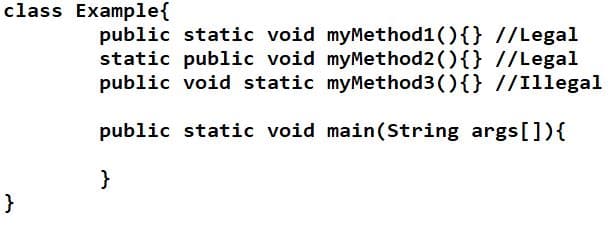
Rule no. 1
Return type of a method should be write with the method name.
Example:
Rule no. 2
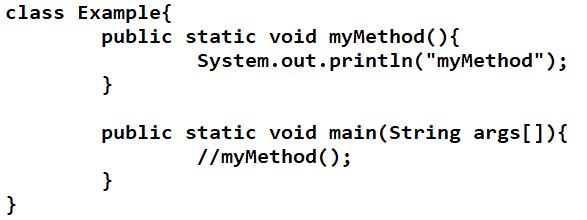
Java program is running from the Main method. Therefore a method you create inside the class should be call in the main method.
Example:
Rule no. 3
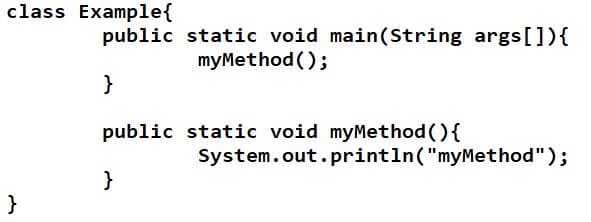
There is no rule for method declaration order inside the class. It can be before or after main method.
Example:
Rule no. 4
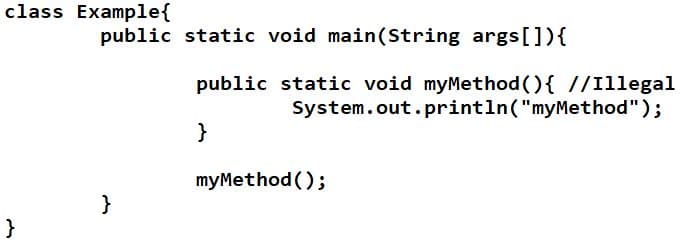
We cannot define a method inside a method.
Example: Should not define a method inside main method.
Rule no. 5
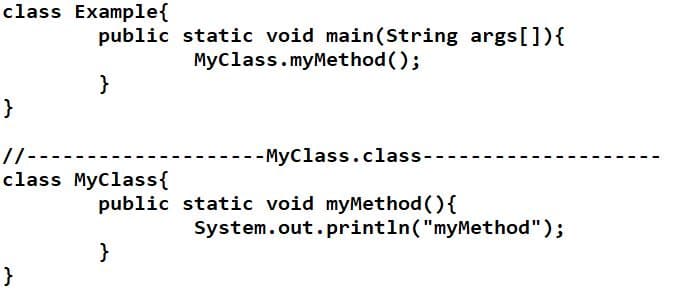
If you create the method inside another class, you should call the method by the class name inside the main method.
Example:
Rule no. 6
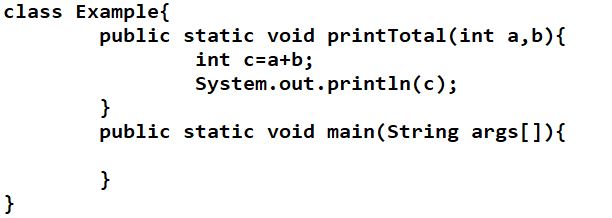
If you put 2 variables for the parameter of the method, you should give their data types separately.
Example: Below given code is illegal.
Rule no.7
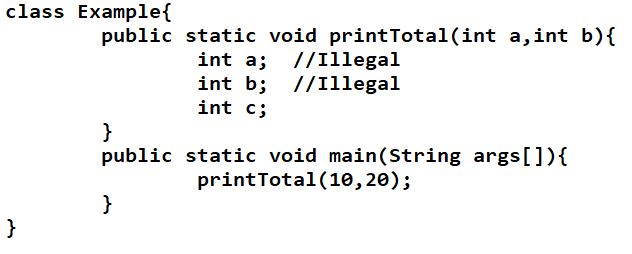
If you already defined a variable for the parameter, you don’t want to define it again inside the method body.
Example:
Rule no. 8
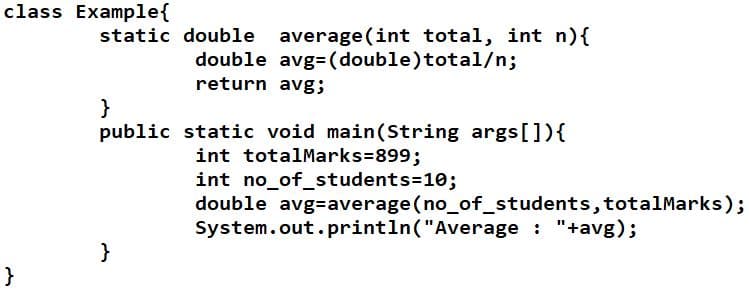
When you call a method inside the main method, the arguments should match with the parameters of the method.
Example:
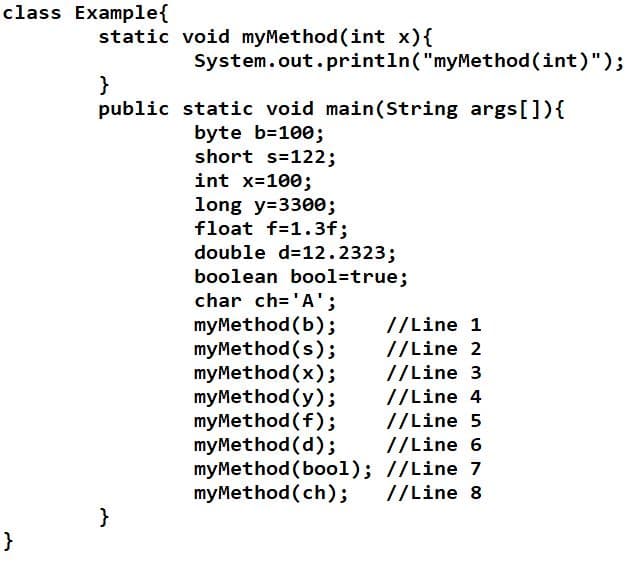
Rule no.9
When you call a method inside the main method, the arguments should compatible with the parameters of the method.
Example: lines 4, 5, 6, 7 are illegal
Rule no. 10
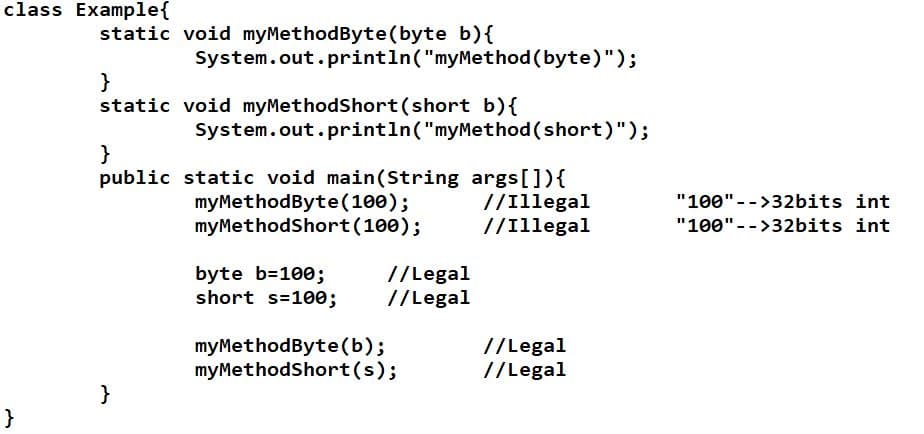
If the argument you pass to the method is integer, Method will take it as 32 bits.
Example:
Rule no. 11
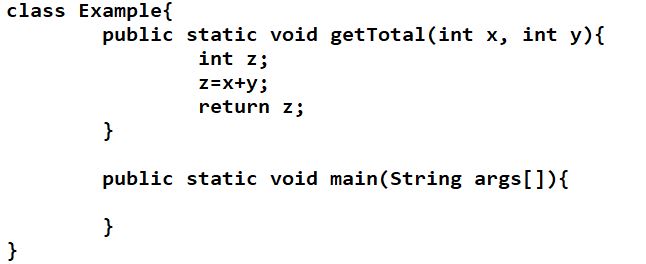
We can’t return values from a void type method.
Example: return z; statement is illegal.
Rule no. 12
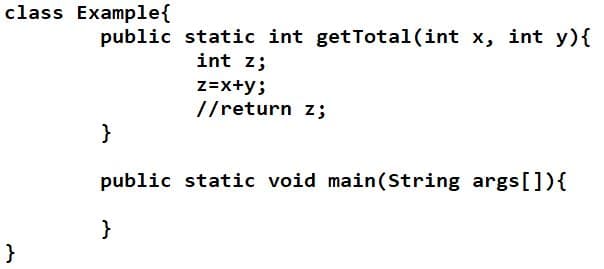
If the method is a return type method, it is compulsory to return a value inside the method body.
Example: Code will give an error.
Rule no. 13
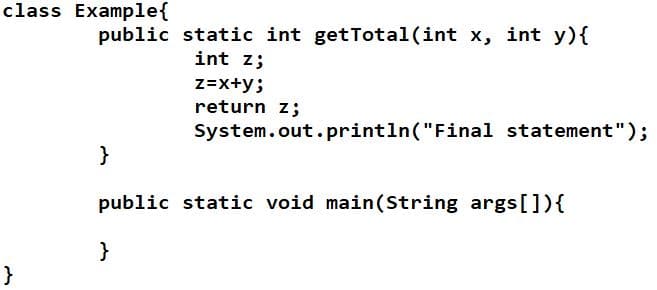
If the method is a return type method, the return value should be the last statement inside the method body.
Example: Code will give an error.
Rule no. 14
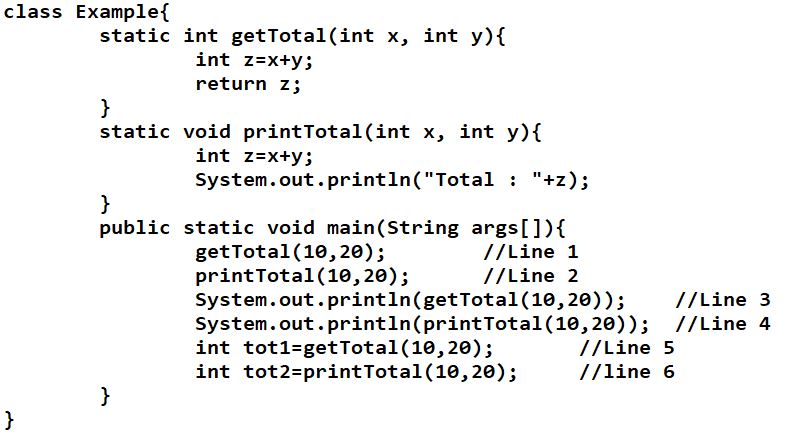
If the method is not defined correctly, compiler will give an error.
Example: lines 4 and 6 will give errors.
Rule no. 15
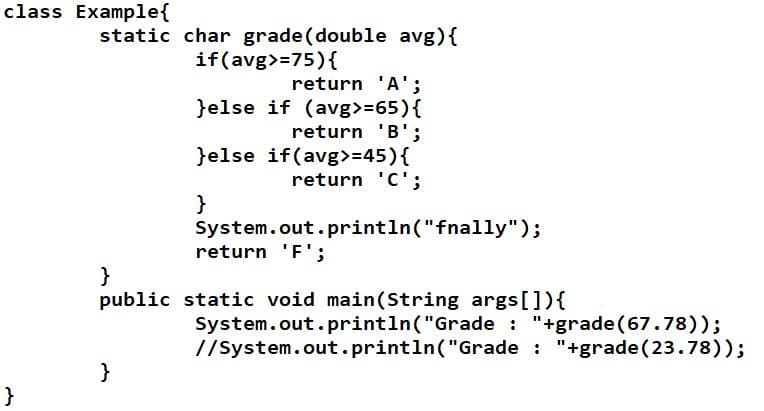
Compiler will not return values for any argument given for a method inside the main method.
Example:
Rule no. 16
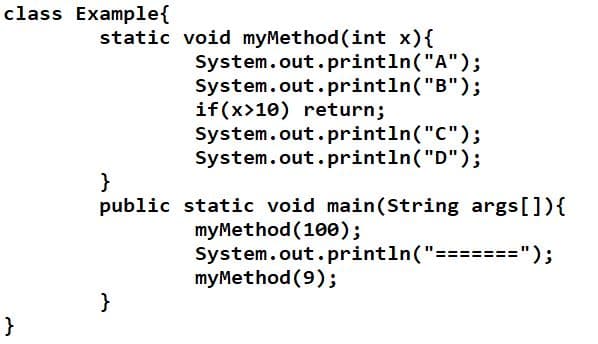
We can stop the data running from a return statement of the method.
Example:
Rule no. 17
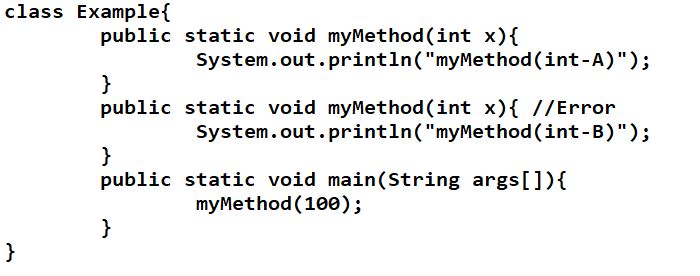
We cannot make 2 methods with the same name and the same parameter type.
Example:
Rule no. 18 (Method overloading)
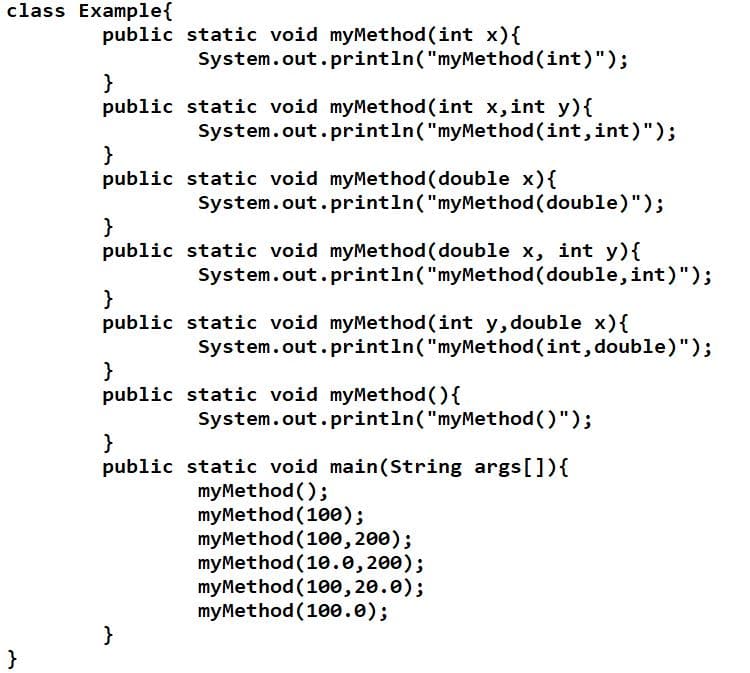
We can make any no.of methods with the same name but different parameter types.
Example:
Java Methods lesson is over now. Let’s meet with the new topic “Arrays” from the next article.
Thank you.